

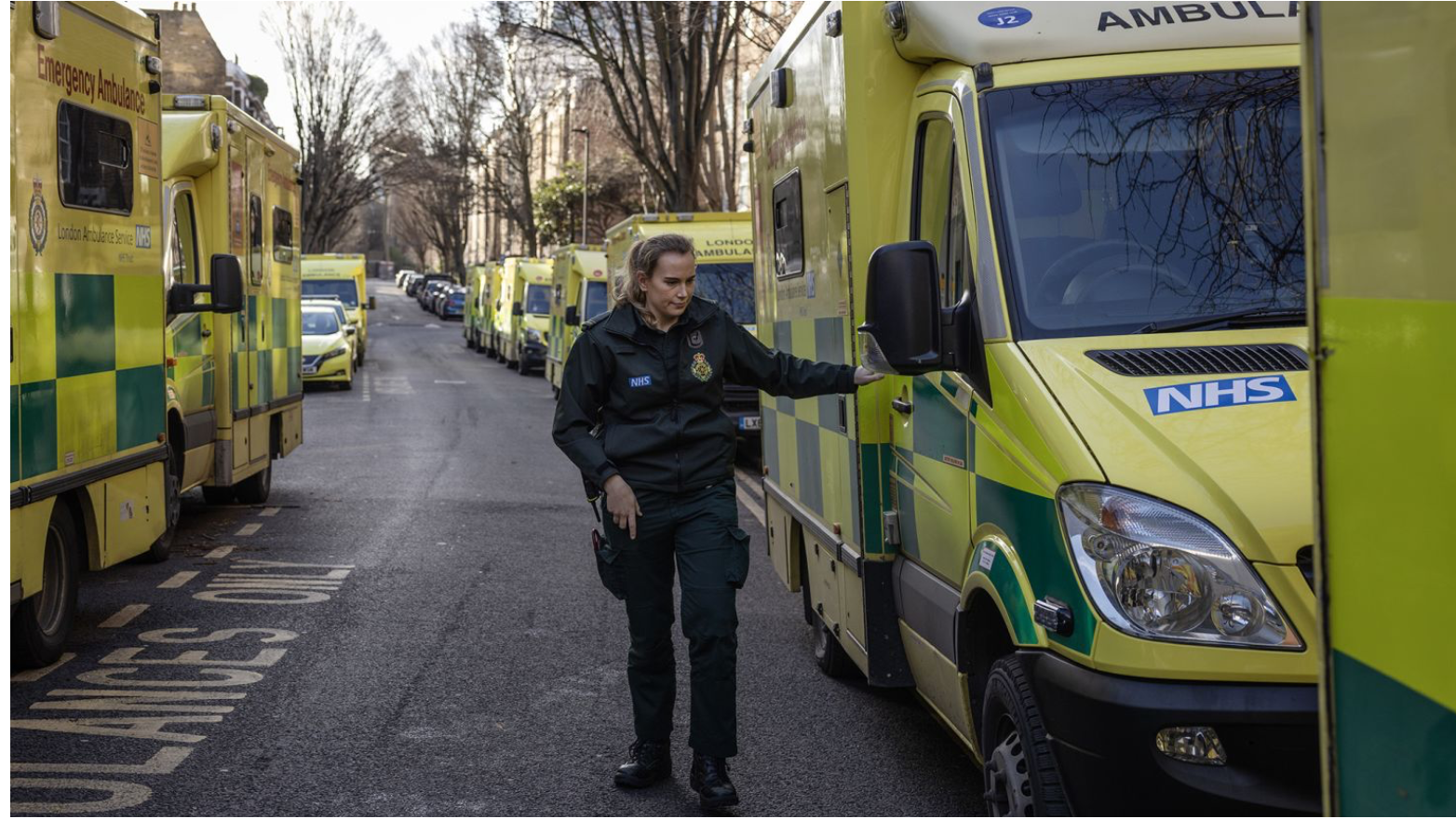
The United Kingdom’s National Health Service (NHS) was once a global model for universal healthcare, but is now struggling under the weight of an aging population. With one in five people aged 65 or older in 2019, a figure projected to rise to one in four by 2039, the demographic shift is transforming healthcare needs and straining service capacity. The system’s cracks are beginning to show.
While British individuals (Brits) are living longer, most are not living healthier. More than half of people over 65 live with two or more chronic health conditions, which means that older adults require prolonged, complex medical care. Increasingly advanced healthcare needs coincide with higher rates of hospitalization, readmission, and longer hospital stays. However, the NHS is designed for acute, short-term treatment. The growing elderly population means they must shift their focus to managing long-term, multifaceted care.
Despite the rising demand, public funding for social care needed after elderly patients leave the hospital has not kept pace with hospitalization rates. Two million elderly people have unmet social care needs, as many struggle with basic daily activities such as dressing or bathing. The lack of support from the government for care post-hospitalization results in admissions that are preventable, increasing wait times and congesting emergency departments.
Why is the productivity of the NHS declining? As the number of Brits in need of healthcare increases, the number of available beds and the quality of care decreases. Despite the rise in staff numbers, successful hospital output remains over 10% lower than before the COVID-19 pandemic, mainly due to the lack of spare capacity and reduced investment.
The NHS waiting list hit 7.8 million in 2023. At the same time, one in eight hospital beds were occupied by patients ready for discharge. The elderly population, plagued by chronic health conditions and unable to take care of themselves, are often unable to leave the hospital and return to their homes independently. Elderly patients often occupy space needed for Brits in need of emergency care, as they require social care services that are unavailable to them.
The UK government hopes integrating health and social care services will ease the pressure on the NHS. In 2023, the NHS devised a policy strategy for emergency departments to see patients quicker by improving ambulance and discharge times, with the plan that this will open up hospital beds. Although this is a great start, this policy does not directly address the burden the elderly population has on the healthcare system as a whole. Without substantial investment and reform, the NHS will continue to be overwhelmed by the very demographic it was designed to aid.
References
Age UK. (2024, September 24). State of Health and Care of Older People in England 2024. Age UK. https://www.ageuk.org.uk/discover/2024/september/state-of-health-and-care-of-older-people-in-england-2024/
Baker, C., Foster, D., & Powell, T. (2024, July 16). Capacity pressures in health and social care in England. House of Commons Library; UK Parliament. https://commonslibrary.parliament.uk/capacity-pressures-in-health-and-social-care-in-england/
Barron, J. (2024, May 31). The State of NHS Finances 2024/25. Www.nhsconfed.org; NHS Confederation. https://www.nhsconfed.org/publications/state-nhs-finances-202425
NHS England. (2023, January 30). Delivery plan for recovering urgent and emergency care services. Www.england.nhs.uk. https://www.england.nhs.uk/publication/delivery-plan-for-recovering-urgent-and-emergency-care-services/
Raymond, A., Bazeer, N., Barclay, C., Krelle, H., Idriss, O., Tallack, C., & Kelly, E. (2021). Our ageing population: how ageing affects health and care need in England. The Health Foundation. https://doi.org/10.37829/hf-2021-rc16
Stevenson, E., & Mutebi, N. (2024, October 7). Healthy Ageing and Care for Older Populations. UK Parliament. https://post.parliament.uk/healthy-ageing-and-care-for-older-populations/



.svg)