

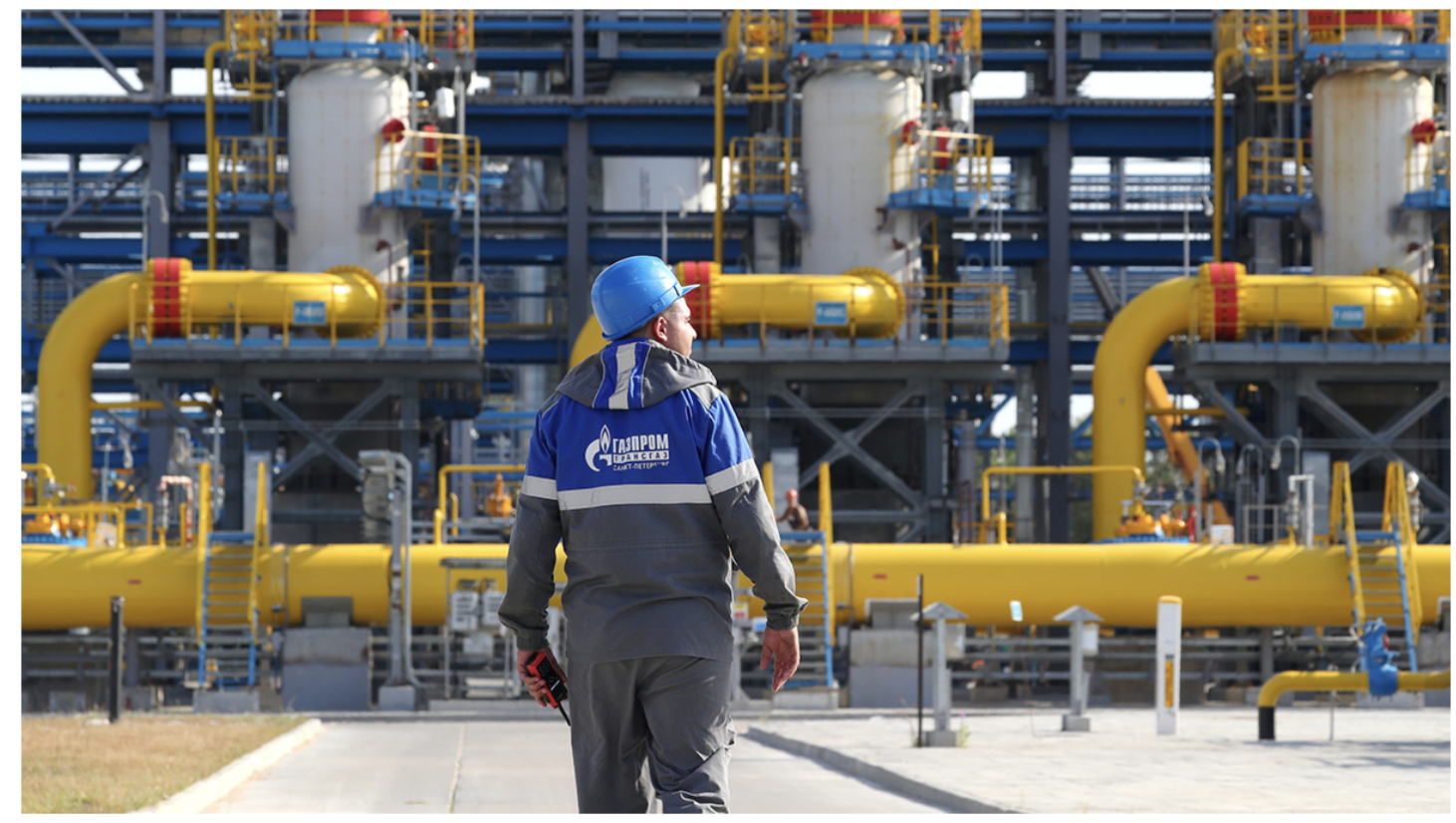
When Russian forces invaded Ukraine in 2022, energy became more than a question of economics, but a test for the strength of the European Union (EU). The invasion exposed deep divisions within the EU, demonstrating how reliance on Russian energy not only constrained foreign policy options but also challenged cohesion among member states.
For decades, Russian gas has fueled Europe’s industries and heated its homes. That dependence became costly in the wake of the European Commission’s proposed sanctions on Russian energy following the invasion. Germany, Italy, and Austria are among the EU’s largest consumers of Russian gas and initially resisted full-scale sanctions, as their leaders feared that a sudden cutoff of Russian supplies would devastate their economies. In contrast, Poland, Lithuania, and Estonia, all nations with vivid historical memories of Soviet control, pushed for immediate embargos, arguing that delaying action would undermine the EU’s credibility in supporting Ukraine and strengthen Russian control. Meanwhile, Hungary outright rejected energy sanctions, as Prime Minister Viktor Orbán claimed they would cripple the country’s economy and insisted on maintaining all Russian imports.
This lack of unity indicates a broader geopolitical dilemma: Europe’s interdependence on Russia limits its ability to act collectively. Energy was once a stabilizing link, but has now become a source of disagreement. In response, the European Commission launched the REPowerEU initiative, banning Russian coal, gas, oil, and nuclear fuel, in efforts to reduce dependence on Russian fossil fuels and speed up the “green transition” by 2027. Progress has been significant, but uneven. For example, the Czech Republic ended its reliance on Russian oil imports delivered through the Druzhba pipeline in 2024, while other states remain reluctant to adjust. The EU faced political pushback from member states that rely heavily on Russian imports after adopting its seventeenth sanctions package against Russia in May 2025.
Recent reports from the European Commission highlight both progress and ongoing challenges in achieving energy independence. Gas storage has reached record levels, and imports from non-Russian suppliers have surged. Yet, political divisions persist. The Commission’s latest update on the REPowerEU strategy indicates that while most member states have diversified their energy supplies, nations such as Hungary continue to publicly resist the phase-out due to the economic burden of sanctions.
Scholars have observed that these divisions reveal the structural limitations of the EU’s decision-making infrastructure. According to a critical analysis of the EU’s sanctions framework, unanimity often slows collective action, especially when national interests differ. As the European Commission continues to push for a unified foreign energy policy, balancing solidarity with sovereignty will remain a persistent challenge. The EU’s struggle to reconcile support for Ukraine with its economic and material interests reflects the limits of consensus-driven foreign policy in times of crisis. The energy dilemma raises a fundamental question: can the EU truly maintain unity when the price of solidarity entails national sacrifice?
References
Directorate-General for Enlargement and Eastern Neighbourhood. (2025, May 20). EU adopts 17th sanctions package against Russia. European Commission. https://enlargement.ec.europa.eu/news/eu-adopts-17th-sanctions-package-against-russia-2025-05-20_en?utm_
AP News. (2025, January 14). The Czech Republic ends its energy dependence on Russian oil imports. AP News. https://apnews.com/article/czech-russia-oil-dependence-druzhba-pipeline-fiala-83262012fed2f32bd285d8a976dd8fa6
Directorate-General for Energy. (2024, February 15). In focus: EU energy security and gas supplies. European Commission. https://energy.ec.europa.eu/news/focus-eu-energy-security-and-gas-supplies-2024-02-15_en?utm_
Directorate-General for Energy. (2025, May 16). REPowerEU 3 years on: Commission takes stock of progress to phase out Russian fossil fuels. European Commission. https://energy.ec.europa.eu/news/repowereu-3-years-commission-takes-stock-progress-phase-out-russian-fossil-fuels-2025-05-16_en?utm_
European Commission. (2022, May 18). REPowerEU. European Commission. https://commission.europa.eu/topics/energy/repowereu_en
Mazneva, E. (2022, February 27). Energy Firms Snap Up Russian Gas as Europe Seeks Alternatives. Bloomberg.com; Bloomberg. https://www.bloomberg.com/news/articles/2022-02-27/energy-firms-snap-up-russian-gas-as-europe-seeks-alternatives
Pertiwi, L. A. (2024). The EU’s Approach to Sanctions on Russia: A Critical Analysis of the Existing Literature. Central European Journal of International and Security Studies, 18(3), 61–86. https://doi.org/10.51870/noex4475
Reuters. (2022, April 2). Lithuania ceasing all Russian gas imports for domestic needs. Reuters. https://www.reuters.com/business/energy/lithuania-ceasing-all-russian-gas-imports-domestic-needs-2022-04-02/
Smith-Meyer, B. (2022, April 4). Austria rejects sanctions against Russian oil, gas. POLITICO. https://www.politico.eu/article/austria-rejects-sanctions-against-russian-oil-gas/
Spike, J. (2025, September 26). Hungary’s Orbán tells Trump that dropping Russian energy would bring economy “to its knees.” AP News. https://apnews.com/article/hungary-orban-trump-russian-oil-gas-b00447abc754b6893ed26453a7fe81b1
TASS. (2025, September 18). Estonia fully bans purchase of Russian gas from 2026 — minister. TASS Russian News Agency. https://tass.com/economy/2018433


.svg)